Evaluating Craft WINE Watercolor Patterns for Professional and Personal Wine Branding Needs
In the competitive landscape of artisanal beverage marketing, visual identity plays a pivotal role in distinguishing a brand from its peers. For craft wine producers, home wineries, and culinary enthusiasts, the aesthetic presentation of products and promotional materials is not merely decorative; it is a critical component of storytelling. The Craft WINE Watercolor Patterns collection offers a specialized solution for those seeking to convey authenticity, tradition, and artisanal quality through digital design assets. This article provides a comprehensive evaluation of this resource, analyzing its components, technical specifications, use cases, and how it compares to broader categories of graphic design assets.
Understanding the Core Components of Craft WINE Watercolor Patterns
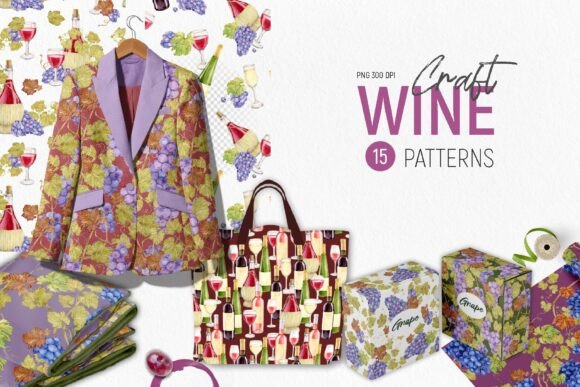
The Craft WINE Watercolor Patterns pack is not a single image but a curated library of 15 seamless patterns and corresponding clipart elements. It is designed specifically with the nuances of wine culture in mind. Unlike generic stock photography or abstract vector art, this collection focuses on hand-drawn watercolor aesthetics that evoke a sense of heritage and craftsmanship. The visual narrative is constructed from several key thematic elements:
- Viticulture Imagery: Hand-drawn bunches of grapes representing different varieties serve as the foundational motif. These are rendered in a soft, organic style that mimics traditional watercolor techniques.
- Serving Elements: The inclusion of wine glasses filled with white, red, and rosé wines adds contextual realism. These elements help designers create scenes rather than just backgrounds.
- Gastronomic Pairings: Recognizing that wine is often consumed with food, the set includes illustrations of cheeses, figs, almonds, and serving wooden boards. This expands the utility of the patterns beyond pure viticulture into the realm of hospitality and dining.
- Production Context: Wooden barrels used for fermenting wine juice ground the designs in the actual process of winemaking, appealing to consumers who value transparency and traditional methods.
What makes this collection distinct is the cohesive vintage style applied across all elements. Because every item—from the grape clusters to the cheese wheels—shares the same artistic DNA, they can be mixed and matched without creating visual dissonance. This consistency is often difficult to achieve when sourcing individual images from disparate libraries.
Technical Specifications and File Integrity
For professional designers and business owners, the technical quality of digital assets is as important as their aesthetic appeal. The Craft WINE Watercolor Patterns package delivers files that meet industry standards for both print and high-resolution digital display.
All 15 PNG files are provided at a resolution of 300 dpi. This density ensures that when patterns are tiled for packaging labels, menus, or large-format banners, the edges remain crisp and the details do not pixelate. The color format is RGB, which is standard for screen-based media, though the high resolution allows for sufficient quality in many printing applications if converted appropriately. Crucially, all PNG files feature a transparent background. This is a significant advantage over JPEG formats, as it allows users to overlay these watercolor elements onto any background color or texture without dealing with unsightly white boxes or awkward cropping.
Comparative Analysis: Watercolor Clipart vs. Alternatives
When selecting visual assets for wine-related projects, creators typically choose between three main categories: vector graphics, photographic imagery, and hand-drawn digital art (such as the Craft WINE Watercolor Patterns). Understanding the tradeoffs between these options helps in making an informed decision.
Watercolor Art vs. Vector Graphics
Vector graphics are scalable and clean, often used for modern, minimalist branding. However, vectors can sometimes feel sterile or overly geometric. In contrast, watercolor art introduces texture, imperfection, and warmth. For a craft winery aiming to communicate "handmade," "small-batch," or "rustic elegance," the Craft WINE Watercolor Patterns offer a more emotionally resonant connection than sharp vector lines. The slight bleeding of colors and organic shapes mimic the unpredictability of nature, which aligns well with agricultural products like wine.
Watercolor Art vs. Stock Photography
Stock photography is ubiquitous and can look generic if not carefully curated. Furthermore, licensing real photos of specific vineyards or bottles can sometimes lead to legal complexities regarding trademarked items. Digital watercolor illustrations avoid these pitfalls. They are original creations that provide the *feeling* of a photograph—the texture of wood, the translucency of glass—without the risk of copyright infringement associated with real-world objects. Additionally, illustrations allow for greater flexibility in composition; a designer can place a cheese wedge next to a barrel in a way that might be physically impossible or aesthetically pleasing in a real photo.
Strategic Use Cases and Applications
The versatility of the Craft WINE Watercolor Patterns allows them to be integrated into various stages of a brand’s communication strategy. Below are practical examples of where this asset pack adds the most value.
Packaging and Label Design
Wine labels are small canvases where every millimeter counts. Seamless patterns derived from this collection can be used to create elegant borders or full-background textures for wine labels. The transparent PNGs allow designers to layer grape motifs subtly behind text, adding depth without obscuring crucial information like vintage year or alcohol content. The vintage style pairs exceptionally well with serif fonts, enhancing the perception of legacy and quality.
Digital Marketing and Social Media
In the digital space, engagement is driven by visually appealing content. The high-resolution nature of these files means they retain clarity when resized for social media banners, Instagram posts, or website headers. A winery could use a pattern of wine glasses and grapes as a header image for a blog post about "Pairing Red Wines with Hard Cheeses." The consistent theme reinforces brand recognition across different platforms.
Event Materials and Hospitality
For wineries hosting tastings, festivals, or harvest events, printed materials require a polished look. Menus, tasting notes, invitations, and table tents benefit from the sophisticated yet approachable vibe of watercolor art. The inclusion of food-related elements (figs, almonds, cheese) makes this pack particularly useful for creating cohesive menus that highlight pairing suggestions. Stickers for promotional giveaways can also utilize individual clipart elements, providing tangible reminders of the brand experience.
Evaluation of Strengths and Limitations
No single asset pack is a universal solution. It is essential to weigh the benefits against potential limitations to determine if the Craft WINE Watercolor Patterns fit your specific project requirements.
Strengths
- Cohesion: The unified vintage style eliminates the need for extensive editing to match tones or styles.
- Thematic Relevance: Every element is directly related to wine culture, reducing the search time for relevant icons.
- Format Flexibility: Transparent PNGs at 300 dpi work for both web and print, maximizing the utility of the purchase.
- Emotional Appeal: The hand-drawn aesthetic humanizes the brand, fostering a connection with customers who appreciate artisanal values.
Limited Considerations
Style Specificity: If a brand’s identity is strictly modern, tech-forward, or minimalist, the vintage watercolor style may clash with their existing visual language. In such cases, a vector-based or monochromatic palette might be more appropriate.
Color Palette: While watercolors are versatile, they often rely on natural, muted tones. Brands requiring bold, neon, or highly saturated primary colors may find the subtle hues of this collection too subdued. However, the RGB format allows for some adjustment in brightness and saturation within design software.
Quantity Constraints: With 15 patterns, the collection is robust but finite. Large-scale campaigns requiring hundreds of unique variations might eventually exhaust the available combinations, necessitating additional asset purchases or custom illustration work.
Decision Framework: Is This the Right Choice?
Selecting the right design assets depends on aligning tool capabilities with project goals. The Craft WINE Watercolor Patterns are an excellent investment for:
- Home Wineries and Small Producers: Who lack the budget for custom illustration commissions but need high-quality, professional-looking materials to compete with larger brands.
- Marketing Agencies: Working with clients in the food and beverage sector who need rapid prototyping of labels or social media content.
- Event Planners: Organizing wine-themed parties, tastings, or culinary workshops where themed stationery and decor are required.
- Content Creators: Bloggers and influencers focusing on wine education, recipes, or lifestyle content who need consistent, attractive visuals for their articles and videos.
Conversely, readers should consider alternative resources if they require photorealistic depictions of specific geographic locations, need animations or video assets, or operate within a brand guideline that strictly forbids illustrative or vintage styles.
Conclusion
The Craft WINE Watercolor Patterns represent a thoughtful synthesis of artistic quality and practical utility. By offering a complete ecosystem of related elements—from grapes to barrels to pairings—it simplifies the design process for professionals and amateurs alike. The emphasis on high-resolution, transparent PNGs ensures that these assets perform reliably across diverse mediums. For anyone looking to infuse their wine-related projects with a sense of history, craftsmanship, and charm, this collection provides a strong foundation for creative expression. Whether designing a label, a menu, or a digital banner, the ability to leverage pre-coordinated, high-quality watercolor art can significantly elevate the perceived value of the final product.